

Daniel Freiberger
60 min · in German
Key Takeaways
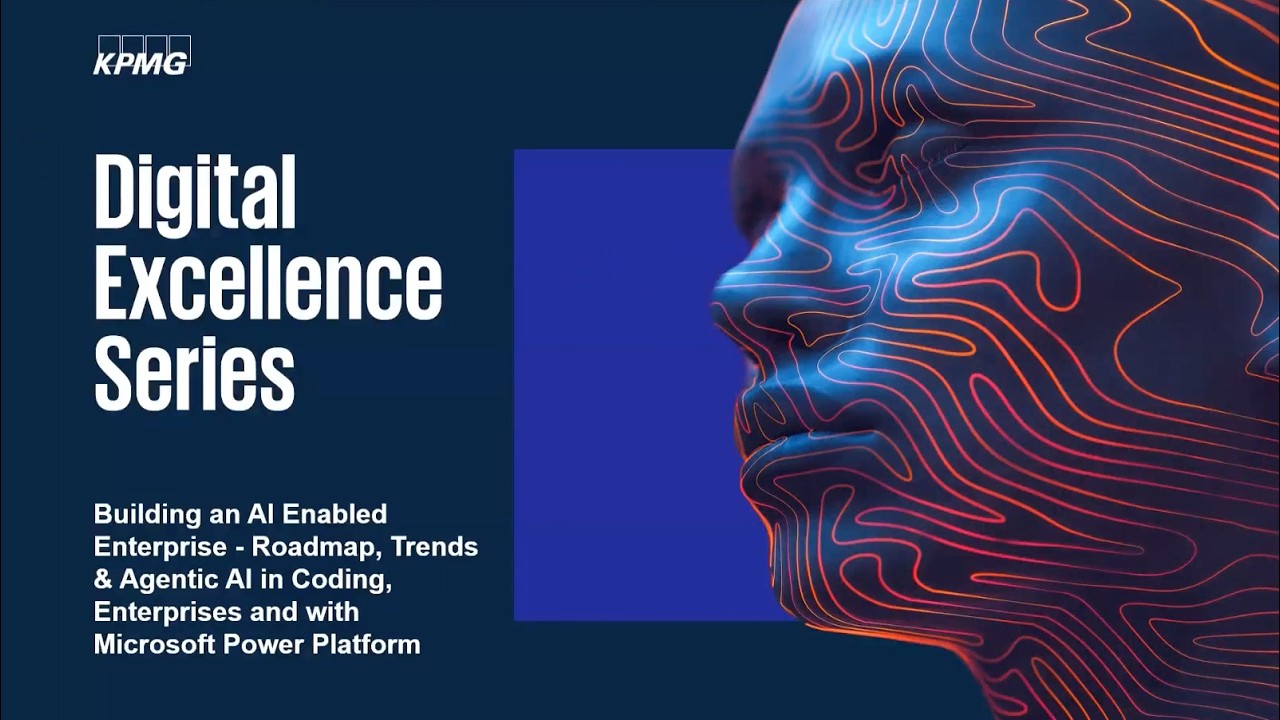
- KPMG Austria invited our Managing Director Daniel Freiberger to speak at the webinar “AI Enabled Enterprise”, part of its Digital Excellence Series, on 15 October 2026.
- His topic: agentic AI in practice, covering agents in client projects and in our own software development.
- The core message: an agent system becomes reliable when specialised agents check each other, ideally using different models. At the key points, a human gives the approval.
- You can watch the recording of the full webinar (in German) right below this summary.
Many organisations have now gained their first experience with AI: an assistant that summarises texts, a chatbot for internal questions, a pilot in one department. The next step is a bigger one: agents that complete tasks across several steps and work together as they do.
KPMG Austria explored this step in the October edition of its Digital Excellence Series. Adam Kiefer (KPMG Austria) hosted the webinar. Daniel Hager (Microsoft) presented what is new in the Microsoft Copilot ecosystem, and David Wright (Evol.X) showed examples of agents on the Microsoft Power Platform. Daniel Freiberger contributed the perspective of implementation. The recording shows the full webinar. Here we summarise Daniel’s part.
From Assistant to Agent System: Agents That Check Each Other
Daniel distinguished three stages. In assisting, a copilot answers questions. He considers this solved. In acting, an agent pursues a goal across several steps. In his view, this too has become standard. His focus is therefore on orchestrating: specialised agents work together and check each other, ideally with different models. The result is an overall system whose outputs you can rely on.
Why different models? If a language model’s output is validated by the same model, the feedback tends to be positive rather than critical. That is why a different model does the checking.
Examples from Client Projects: Agents That Hand Work to Each Other
Evolit now uses agents in a range of client projects. At a certification company, for example, they combine rule-based checks with AI-based checks and detect rule violations. One agent controls the process, and a human gives the final approval.
Damage Reports in Property Management
Daniel went into more detail on a system built for a client in the real estate sector. It automatically assigns and processes damage reports from tenants. An orchestrating agent manages the process, while specialised agents handle the individual steps:
- First, personal data that is not needed for processing is removed.
- A language model classifies the report: is it damage, how urgent is it, who is responsible?
- Another agent assigns the trade. To do so, it retrieves data from the ERP system and matches it with the report.
- The property is then assigned.
- The result is a work order, so that service staff or tradespeople can repair the damage on site.
Tenancy law is stored in the background. The system uses several language model providers. This means a model can be replaced if it is no longer available, and the models also check each other. A human still makes the final decision.
You can read more about this project with PROPbase in our article AI for Property Management.
Agentic Coding: Agents Develop Software, Humans Approve
Daniel described agentic coding as the “highest form” of orchestrated agents. In new projects, the team at Evolit no longer writes code by hand. Developers increasingly work as requirements engineers and architects. They review the results and approve them. The process:
- Specification: interviews produce specifications, documented as product requirement documents.
- Implementation: an agent implements, using whichever model best fits the task. Test cases and documentation are created along the way.
- Code review: Daniel called the review the most important step. A review agent developed in-house checks the code not only technically but also against the requirements from step one. It presents its findings to the developers, who decide before approval.
- Deployment: documentation and release notes are generated automatically.
Legacy Systems: The Old Code Becomes the Specification
Applications often come in for modernisation without any documentation. Here, Evolit uses agents for reverse engineering: specifications are derived from the source code, and the requirements engineering team reviews, refines and completes them. They then feed into the new application. In the past, many organisations shied away from replacing such applications: knowledge of the application was missing, and rebuilding and testing were expensive. With agents, rebuilding has also become more efficient. In Daniel’s view, replacing legacy systems therefore pays off again.
Four Learnings: Small Agents, Clear Boundaries, Humans at the Gates
- Many small agents instead of one huge prompt. They check each other, ideally with different models. One agent orchestrates the whole.
- Governance first. Define what an agent may do and which data it may access. Where necessary, it works in an isolated environment.
- Proof of Value instead of proof of concept. In Daniel’s view, there is no longer any need to prove that the technology works. What matters is defining in advance what value an agent system should deliver.
- Humans stay at the gates. Defined checkpoints are needed where a human steps in and gives approval. This is particularly important in regulated industries, not least with regard to liability.
Outlook: Two Sensible Routes to an Agent System
To close, Daniel addressed the question of what to build agents with. He sees two sensible routes. Custom software suits business-critical, high-performance applications, core systems with regulated processes and the replacement of legacy systems. If the Power Platform is already in use, it is a good starting point for improving standard processes with agents, as topics such as governance and data security are already settled there. David Wright then showed what this looks like in practice.
Thank you to KPMG Austria for the invitation, to Adam Kiefer, Daniel Hager and David Wright for their contributions and to everyone who joined us.
About KPMG Austria, Microsoft and Evol.X
KPMG Austria is Austria’s largest audit and advisory firm, offering services in audit, tax, advisory and law.
Microsoft develops software, cloud services and AI solutions, including Microsoft 365, Azure, Copilot and the Power Platform.
Evol.X is a Vienna-based consulting and software company for customer experience and AI, focusing on CRM, marketing automation and Microsoft solutions such as Dynamics 365 and the Power Platform. Evol.X is part of the Evolit Group.
More on "Artificial Intelligence"

Artificial Intelligence
What Is Agentic AI? Why Real Value Only Emerges Through Individual Integration
Agentic AI describes AI systems that pursue goals, plan multiple steps and work towards outcomes. Real value only emerges where AI is individually integrated into processes, data, and systems.
Artificial Intelligence
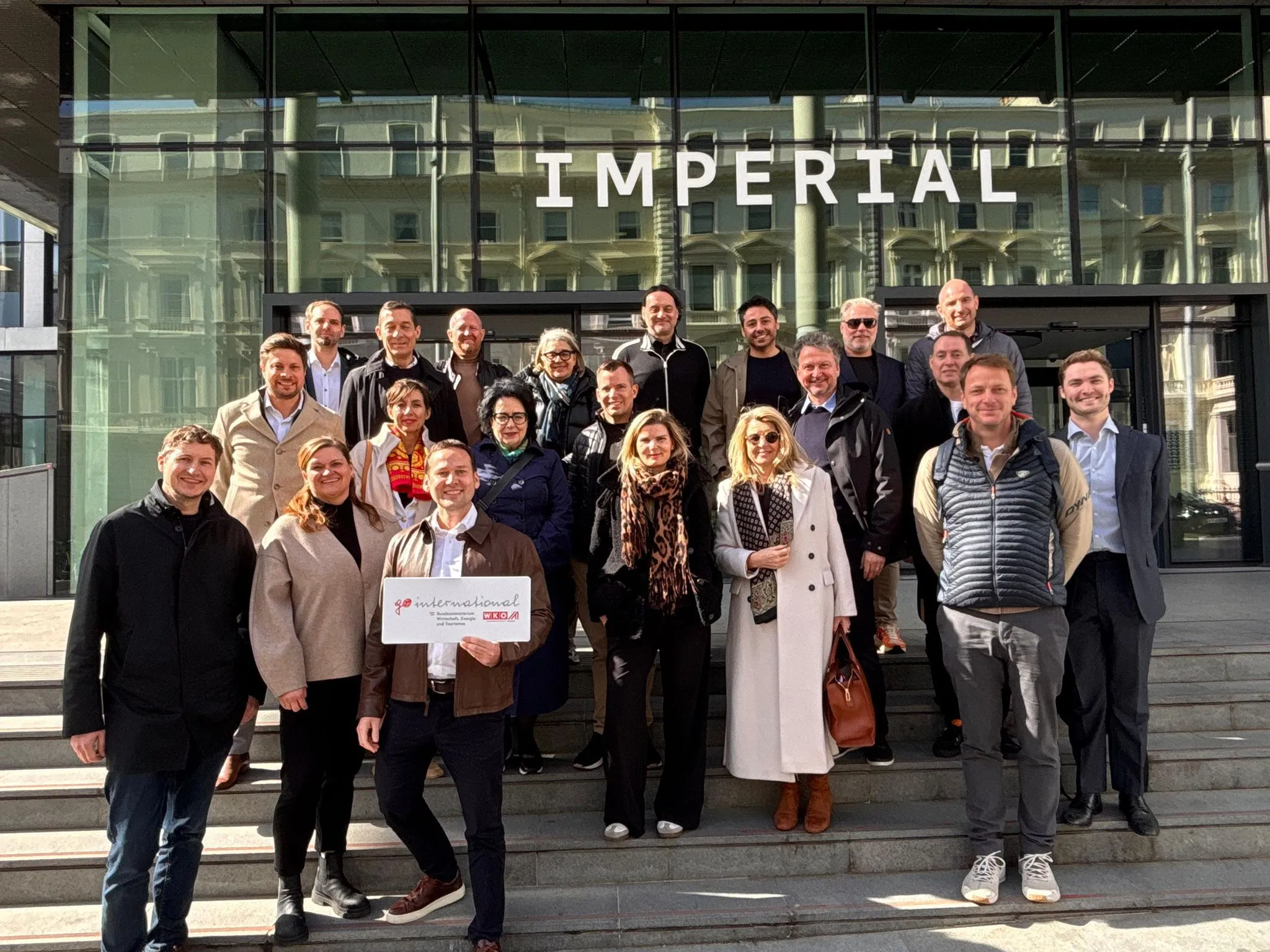
WKO Future Journey London: What Companies Need to Understand About Agentic AI Now
Agentic AI creates real value for companies when integration, governance and process understanding work together. Impressions from the WKO Future Journey to London.

Artificial Intelligence
The Biggest Problem with AI Projects Is Not the Technology
Many companies experiment with AI, but the step from pilot projects to productive applications remains challenging. Strategy, data foundation, integration and clear use cases are decisive.