


Rupesh Ghelani
The Key Takeaways
- ESRIUM was an EU research project funded under Horizon 2020, in which a platform was developed to calculate life cycles and maintenance costs for motorway operators.
- Within the international consortium, Evolit was responsible for developing an AI component that uses machine learning to forecast the future progression of road surface damage.
- The models were trained with weather, traffic and ground-truth data. Evolit analysed the relevant influencing factors together with the motorway operator ASFINAG.
- The benefit: maintenance measures can be planned more proactively, costs calculated more reliably and risks identified earlier.
Whether crack, rutting or pothole: road surface damage often develops gradually. The later it is detected and assessed, the greater its impact on safety, costs and maintenance planning. For motorway operators, it is therefore not only the current condition that matters, but also how damage is likely to develop over time.
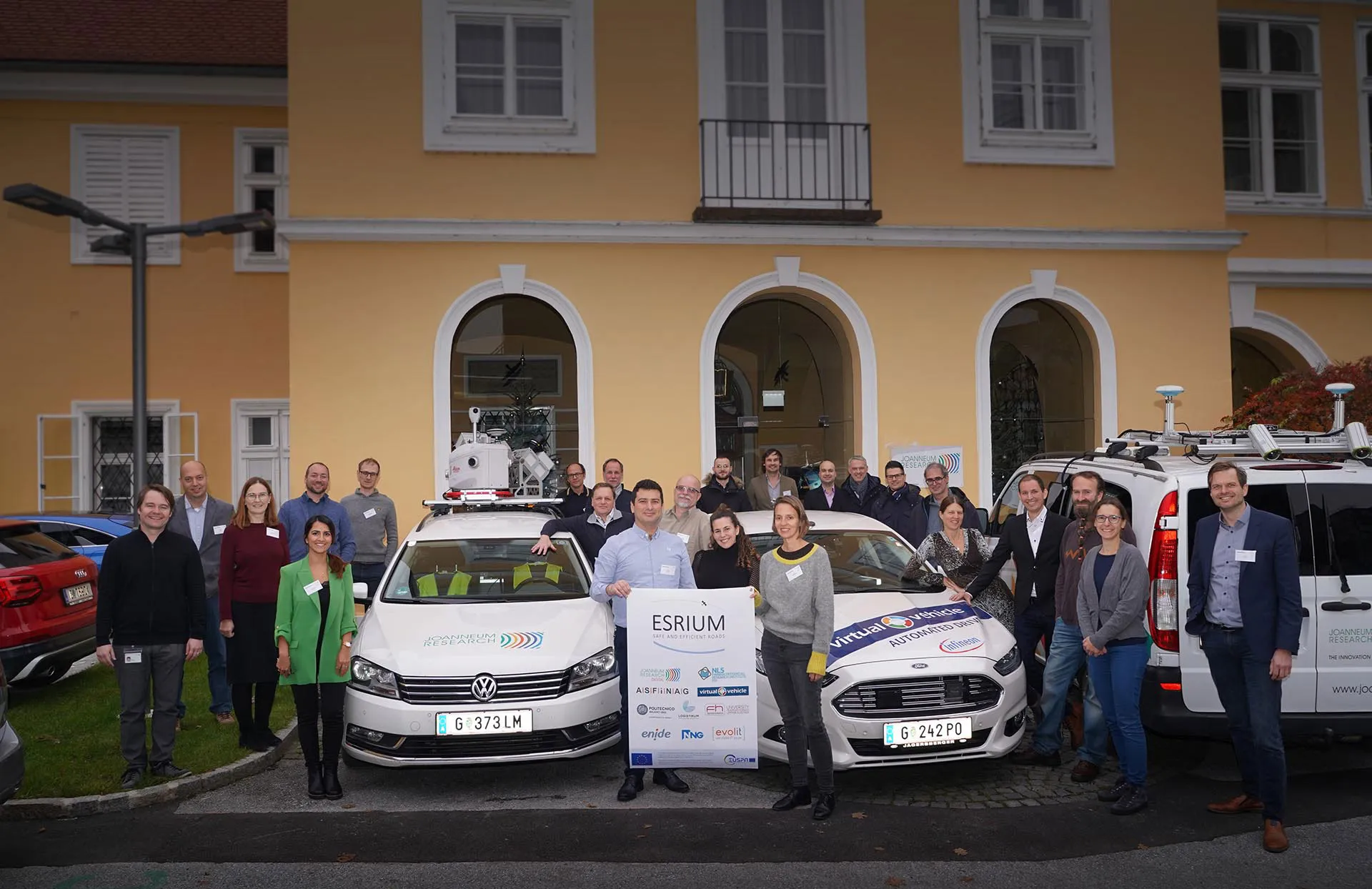
The aim of the ESRIUM research project was to improve exactly that. Funded under Horizon 2020 by the EU Agency for the Space Programme (EUSPA), an international consortium worked on capturing the condition of roads on a data-driven basis and optimising their maintenance.
Within the consortium, Evolit took on a clearly defined task: the AI-supported forecast of how identified road surface damage would develop over time.
Starting Point & Problem: Why a Condition Assessment Alone Is Not Enough
Regular inspections and condition assessments provide important information about the quality of a road surface. Initially, however, they show what a road looks like at a specific point in time.
For the planning of maintenance and rehabilitation measures, this snapshot is not always enough. Two cracks that look similar can develop at different speeds, for example because of traffic load, weather or their exact location.
To prioritise measures sensibly, an additional estimate of future development is needed:
- Which damage could worsen particularly quickly?
- Where is there an increased medium-term risk?
- Which repair can be planned, and where is earlier action required?
- How can budgets and maintenance windows be used proactively?
Analysis & Approach: Machine Learning for the Progression of Road Surface Damage
Evolit’s focus was on forecasting identified damage over time. The central question was: How is a specific item of road surface damage likely to develop under known environmental and traffic conditions?
The progression of road surface damage depends on many factors: weather, traffic load and the condition of the substructure. Each of these datasets contains numerous attributes that can influence damage to a greater or lesser extent. Which of them matter, and how much, cannot be reduced to a fixed set of rules.
Machine learning was a sensible approach here because the relevant influencing factors cannot be fully translated into rigid rules. The models can identify which attributes are significant and make combinations visible that can easily remain hidden in traditional analyses. Evolit therefore trained several machine-learning models with historical weather, traffic and ground-truth data on actual damage progression.
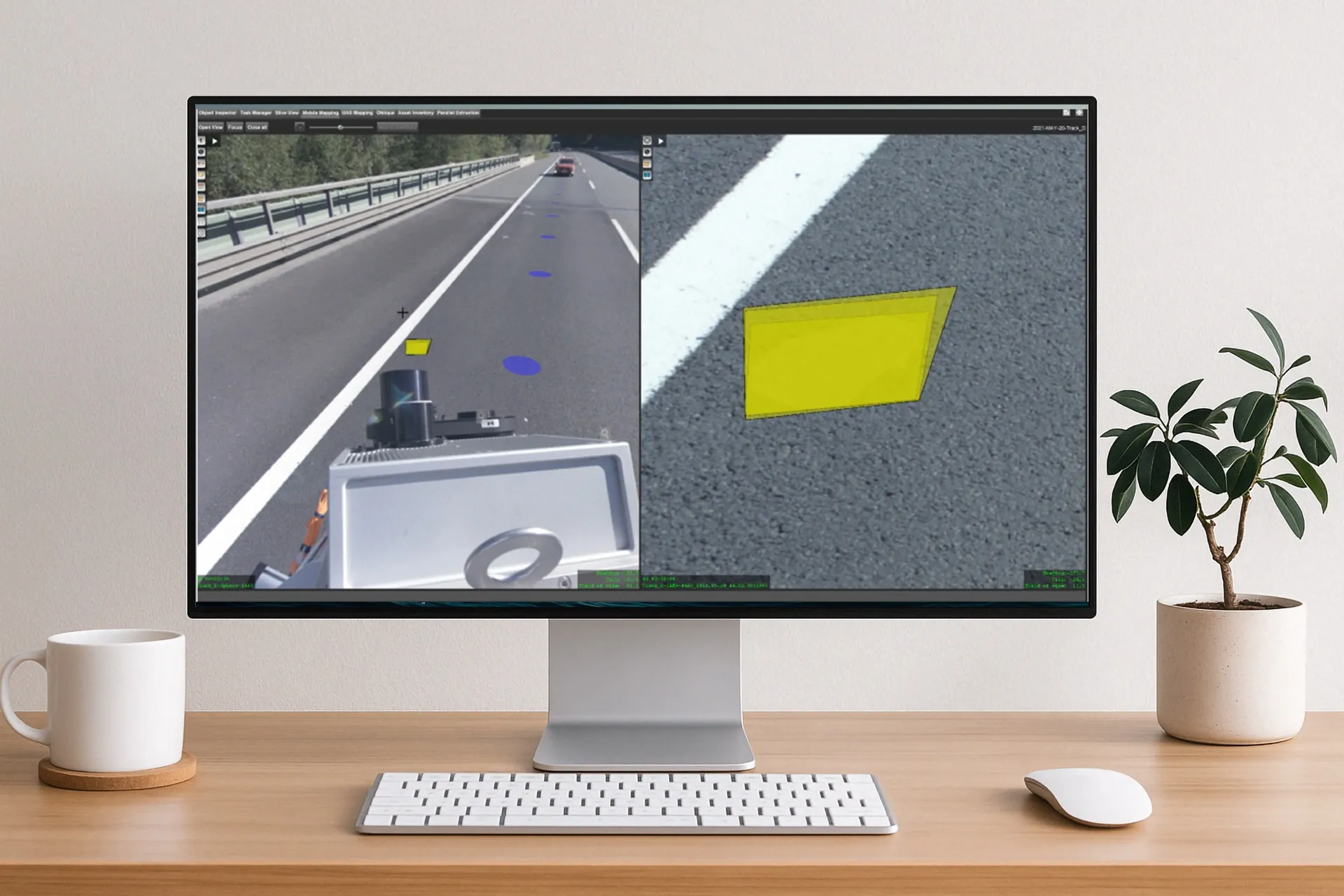
The development was deliberately iterative: different model approaches were tested, evaluated and, in some cases, rejected again until suitable approaches for the prototype had been identified. The fact that several models were developed was intentional: which approach delivers the best results depends, among other things, on the available data basis and the specific use context.
Expert knowledge from the motorway operator was important in this process. Together with ASFINAG, Evolit analysed which factors contribute to the emergence and worsening of road surface damage, and which influencing variables are relevant for the models. The team also took into account that relevant influencing factors can vary by location: conditions in a tunnel differ from those on an open road, and damage on a Finnish motorway can develop differently from comparable damage in Austria.
Results & Benefits: From Snapshot to Predictive Maintenance
The result is an individual forecast for each detected damage case: the model estimates how it is likely to develop, for example how much a crack could expand within a certain period. The current condition assessment is therefore supplemented by a forecast development curve.
For motorway operators, this creates specific advantages:
- More efficient analysis and assessment of large datasets
- Greater planning reliability, because maintenance measures can be prioritised and scheduled more proactively
- An additional data basis for cost and resource planning
- Better risk assessment, because potentially critical developments become visible earlier
Stefan Ladstätter, Technical Lead at Joanneum Research Digital, also emphasises how important the combination of reliable data processing and AI-supported forecasting was for the project: “Evolit translated complex research requirements precisely into powerful software. Large volumes of road condition and GNSS data were processed just as reliably as AI-supported forecasts based on that data for predictive maintenance.”
Outlook: From Proof of Concept to a Production-Ready Tool
The next step is to develop the prototype into a solution ready for production use, with a clearly defined use case and integration into existing processes. With a broader historical dataset, the models can be further validated and improved. At the same time, it will be possible to assess more precisely which approach delivers the best results in each use context.
For Evolit, ESRIUM is a clear example of how AI can be used sensibly in business-critical processes: not as an end in itself, but to create concrete value from existing data. In this case, for the maintenance of critical transport infrastructure.
About ESRIUM
ESRIUM was an EU research project funded under Horizon 2020 and supported by the EU Agency for the Space Programme (EUSPA). Within the project, an international consortium developed solutions to capture road conditions on a data-driven basis and to plan road maintenance more efficiently. More information at esrium.eu.
More on "Mobility"

Mobility
ETCS Key Management System for Trafikverket: Secure Key Management for Sweden's Railways
Evolit and Trafikverket are jointly developing an ETCS Key Management System with online key distribution for secure rail operations in Sweden.
Mobility
Train Prediction with Graph Theory: A Research Project Makes Train Runs Computable
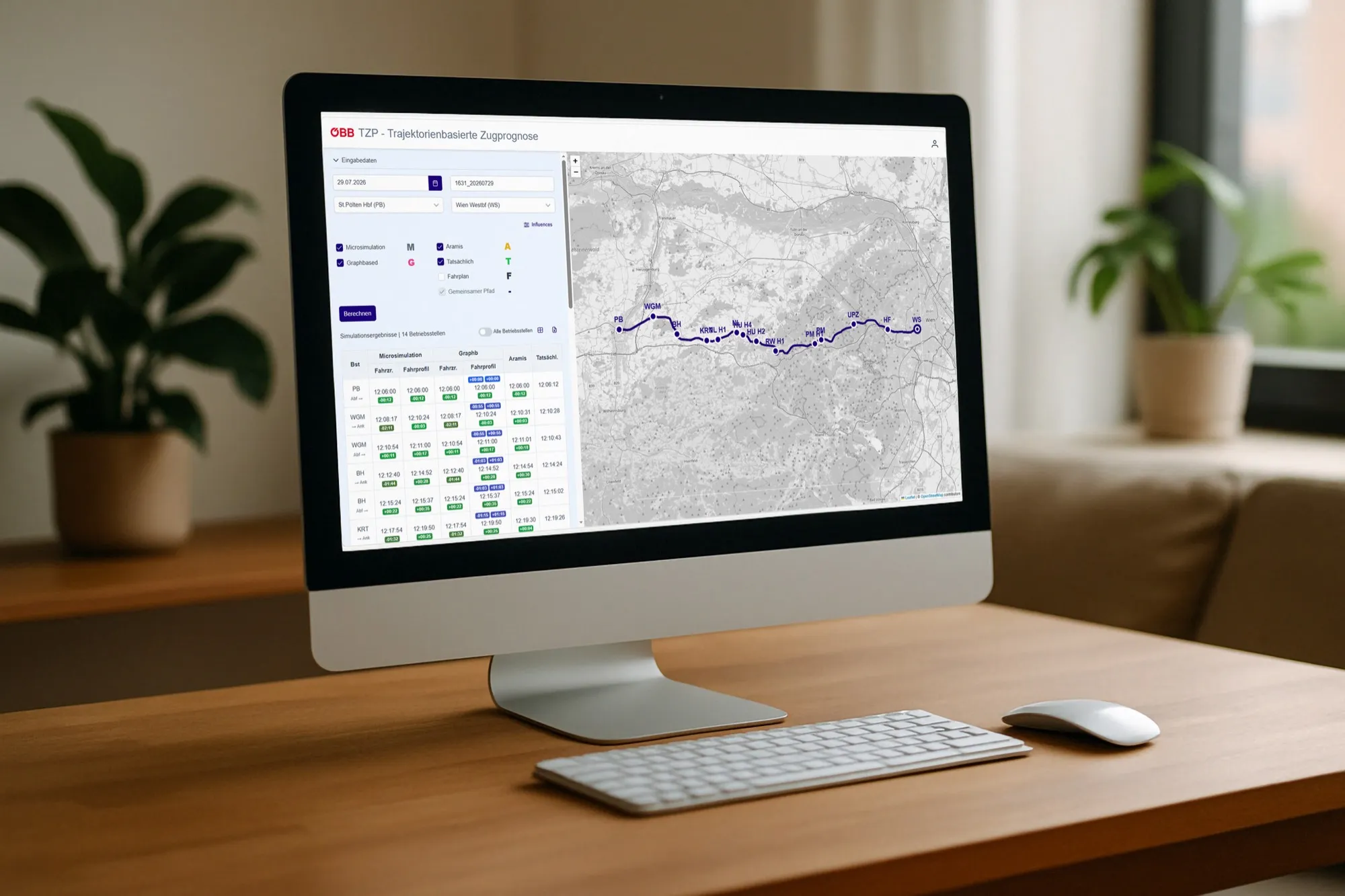
Train prediction with graph theory: how ÖBB-Infrastruktur AG and Evolit model train runs and compare forecasting methods on a shared data basis.

Mobility
Digital Train Preparation in Rail Freight: PORTHOS at ÖBB
With PORTHOS, ÖBB-Infrastruktur is digitalising the planning, dispatching and execution of train preparation – from train path ordering to automated train data reporting.