

Julia Rinnhofer
Key Takeaways
- With PORTHOS, ÖBB-Infrastruktur is digitalising the planning, dispatching and execution of train preparation in rail freight – from train path and shunting orders through to automated train data reporting.
- A single web platform replaces isolated legacy applications that were no longer maintained, and provides everyone involved with the same data in real time.
- The scale: up to 4,000 freight trains per day and more than 15 interfaces to surrounding systems.
- Evolit is part of the client-led project team, contributing expertise from requirements analysis through to software development.
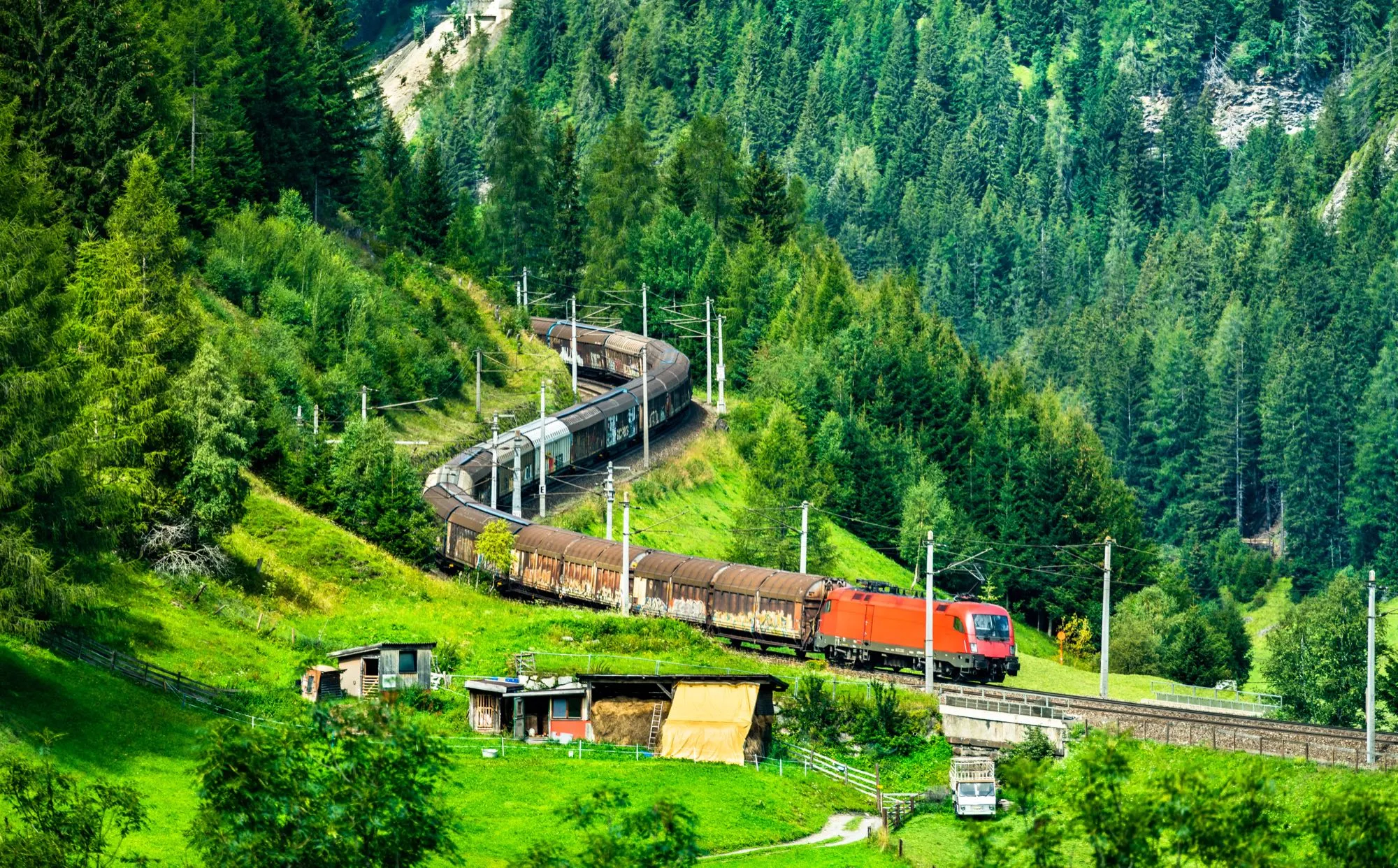
There is a lot to do before a freight train departs: wagons are shunted and assembled into trains, tracks and staff are planned, and train data is transmitted to the right places. For a long time, this train preparation relied on a patchwork of individual tools and legacy systems.
With PORTHOS, ÖBB-Infrastruktur is rebuilding these workflows: a single web platform brings together the planning, dispatching and execution of train preparation and automates manual tasks. Evolit contributes as a technology partner within the client-led project team.
The Starting Point: Many Tools, No Shared Data Basis
One essential process in rail freight is shunting – breaking up trains and assembling new ones. For years, this process was planned and carried out with a mix of Excel, phone calls, email, radio and paper. On top of that came legacy systems that had grown into isolated solutions and were no longer being maintained. With them, valuable know-how was at risk of being lost.
Another problem: the low degree of standardisation. Over the years, every shunting yard in Austria had developed its own working methods and structures. Data and interfaces followed no common pattern, and data quality varied.
ÖBB-Infrastruktur’s goal was a shared digital business architecture that maps all relevant process steps of train preparation, provides a consistent data basis for everyone involved and can integrate external applications. The aim: shorter lead times, greater planning accuracy and information available digitally end to end.
Implementation: Custom Software Development for Digital Train Preparation
Several off-the-shelf products were evaluated during the pre-project phase, but none of them met the specific requirements. The decision was therefore made in favour of custom software development with Evolit.
Requirements Straight from Operations
Requirements are gathered in joint workshops with the business units and prepared as user stories for development. One of the biggest tasks: capturing the different working methods of the individual shunting yards and merging them into one common process.
A wide range of stakeholders is involved, from shunting, train control and network access to other group companies and railway undertakings. Changes during the course of the project are handled by an established change process with clear assessment criteria and several approval steps.
An Architecture Built for Step-by-Step Expansion
Technically, PORTHOS is a modern web application based on a microservice architecture with separate data pools, event-based communication and its own synchronisation logic. This allows the platform to be extended module by module while legacy systems are phased out one after another.
More than 15 interfaces connect PORTHOS with the surrounding systems, including highly complex legacy interfaces with over 300 parameters each. Added to that are requirements relevant to railway safety (SIL) as well as international standardisation specifications. The system is designed for real-world operations with up to 4,000 freight trains per day.
Making Planning Visible
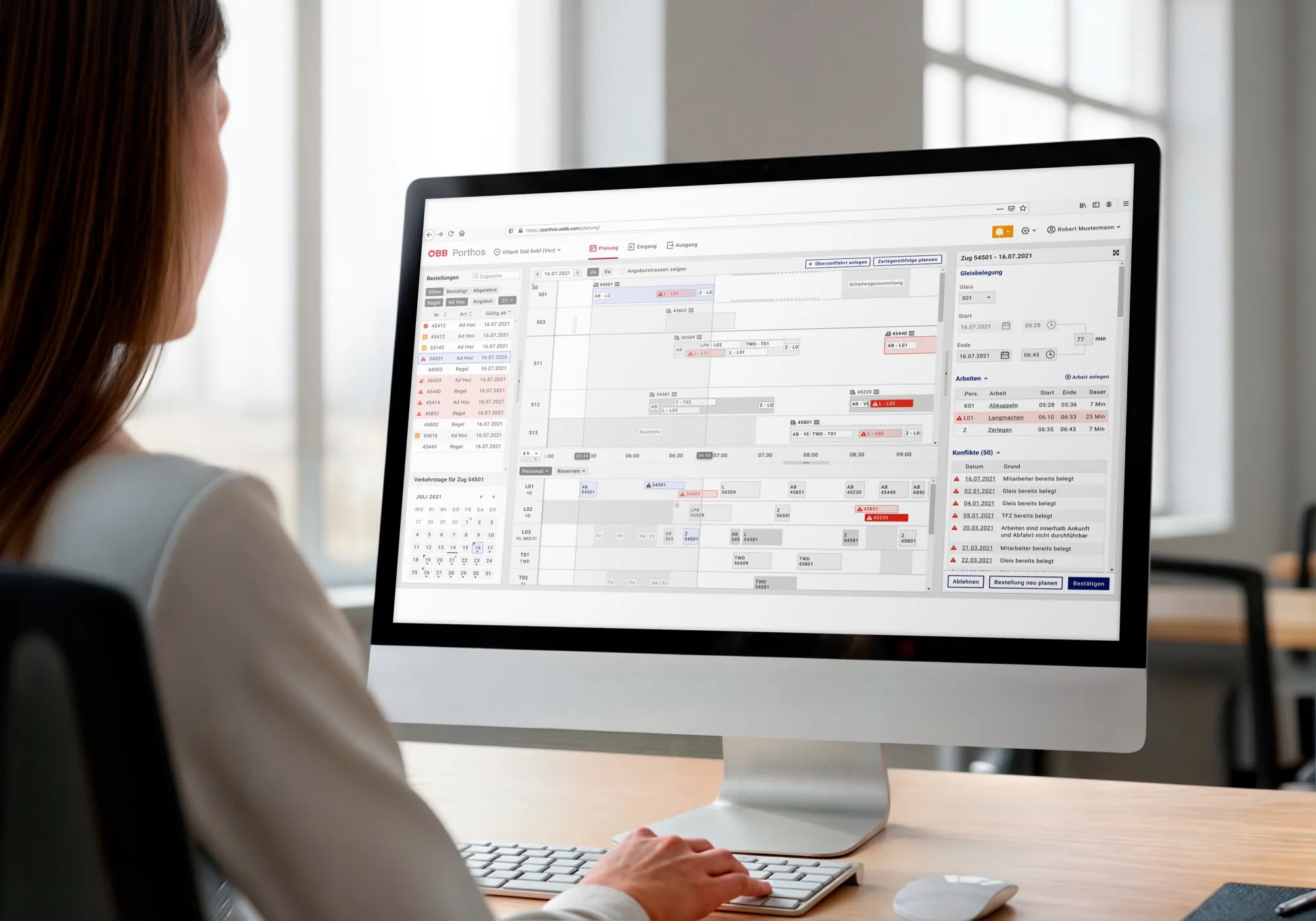
Particular attention is paid to usability. At the heart of the platform is a graphical planning interface with a space-time coordinate system: planners can see at a glance what happens when and on which track – including automatic conflict detection. The complex ordering process for train paths and shunting services was also mapped in coordination with the ordering and train path construction systems so that it is easy to use in the browser.
The Result: From Train Path Ordering to Automated Train Data Reporting
The project is still ongoing, but a large part of the platform is already live. PORTHOS covers several sections of train preparation:
- Ordering and feasibility checks for train path, shunting and facility orders
- Track and staff planning
- Dispatching, wagon transfers, transport chain planning
- Operational execution
- Local feeder services (first / last mile)
- Management of stabling capacity
- Train data reporting: automated in line with the Hermes and TAF-TSI standards

What used to run across many separate tools is now mapped in end-to-end digital processes. Three effects stand out in particular:
Fewer manual tasks
Automated train data reporting saves manual effort in shunting. The user interface is designed to take work off employees' hands rather than create additional work.
One data basis, in real time
Everyone involved works with the same data, available in real time. This gives management a solid basis for steering resources.
Lower operating and maintenance costs
With every expansion stage, the web application replaces existing legacy systems. That helps reduce ongoing operating and maintenance effort and cuts the dependency on systems for which hardly any know-how remains.
Outlook: Expansion Through to the End of 2028
Further expansion stages are planned through to the end of 2028. PORTHOS will thus grow into the universal platform for the entire train preparation process.
“With PORTHOS, our employees get a tool that takes work off their hands instead of creating more – and we get a data basis we can rely on.”
Robert Steiner
INFRA Shunting Operations Management, ÖBB-Infrastruktur AG
More on "Mobility"
Mobility
ETCS Key Management System for Trafikverket: Secure Key Management for Sweden's Railways
Evolit and Trafikverket are jointly developing an ETCS Key Management System with online key distribution for secure rail operations in Sweden.
Mobility
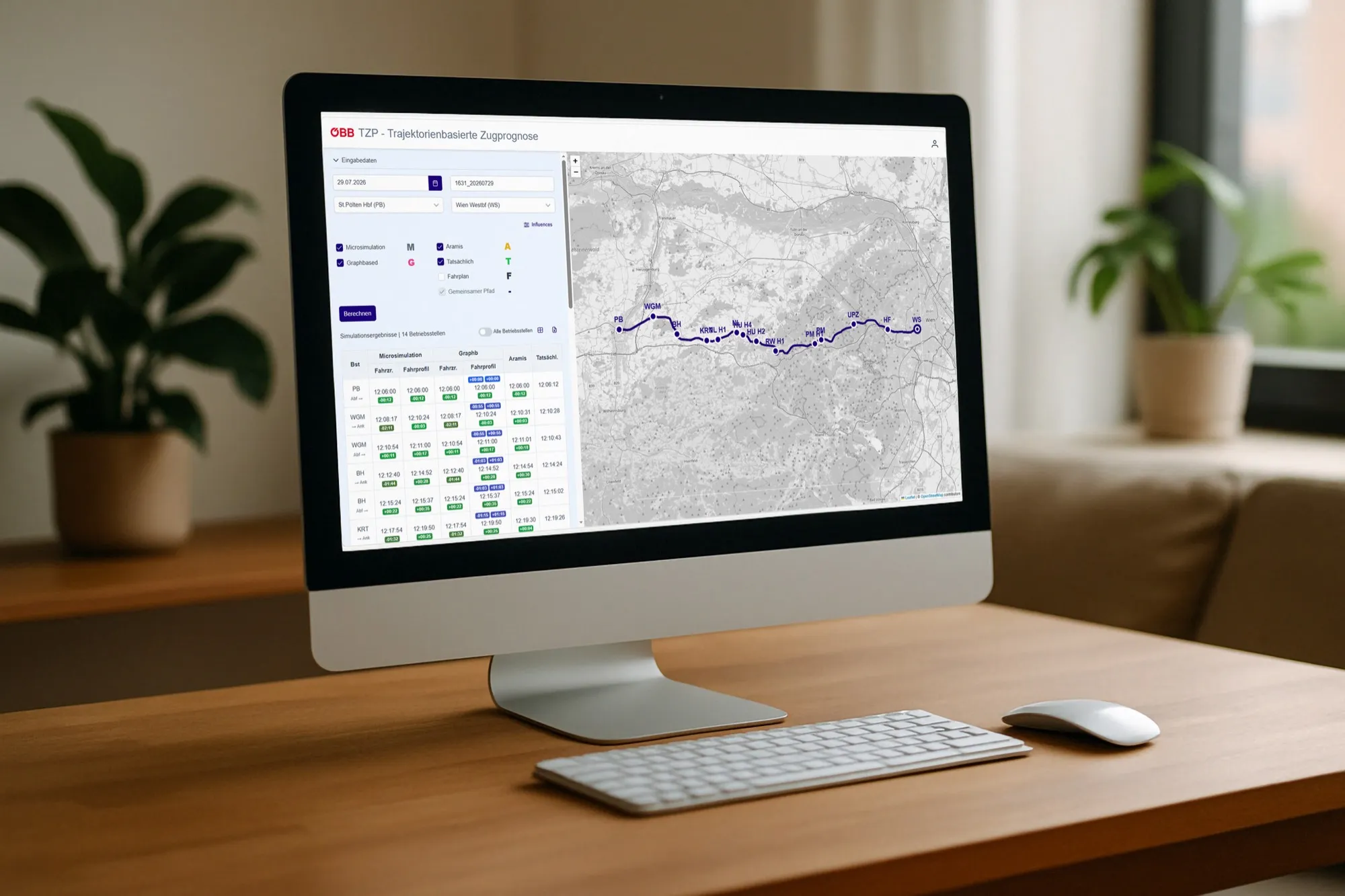
Train Prediction with Graph Theory: A Research Project Makes Train Runs Computable
Train prediction with graph theory: how ÖBB-Infrastruktur AG and Evolit model train runs and compare forecasting methods on a shared data basis.

Mobility
Automatic Warning Systems: The Data Foundation for Safe Work on the Track
How Evolit modernised the data foundation of an automatic warning system in rail operations: a web application with versioning, SSO and RFID integration.