

Michael Nemec
Key Takeaways
- With OSIS, ÖBB (Austrian Federal Railways) is replacing a legacy application that had grown over many years with a modern platform for key station operations processes – above all for security and cleaning services.
- The solution brings together a wide range of application areas: from incident and security documentation to station and building master data, cleaning, service, controlling and other operational tasks.
- Evolit built the platform on the Microsoft Power Platform – individually tailored, modular in design and closely integrated into ÖBB’s existing system landscape.
- Implementation followed a step-by-step approach: from proof of concept to the first usable building blocks through to the MVP.
Initial Situation & Challenge: An Operations System That Had Grown Old
Railway stations are complex operations. Security, maintenance, cleaning, service, administration and documentation interlock every day – often across multiple departments, roles and systems. At ÖBB, station operations processes, especially those around security and cleaning services, were previously handled by a legacy application that had grown over the years and no longer met today’s technical requirements.
The task was therefore not to rebuild individual functions. The goal was to preserve proven workflows while placing them on a modern, maintainable and extensible foundation. Instead of continuing the existing system, OSIS was created: a new platform that maps key station operations processes in a structured, digital way.
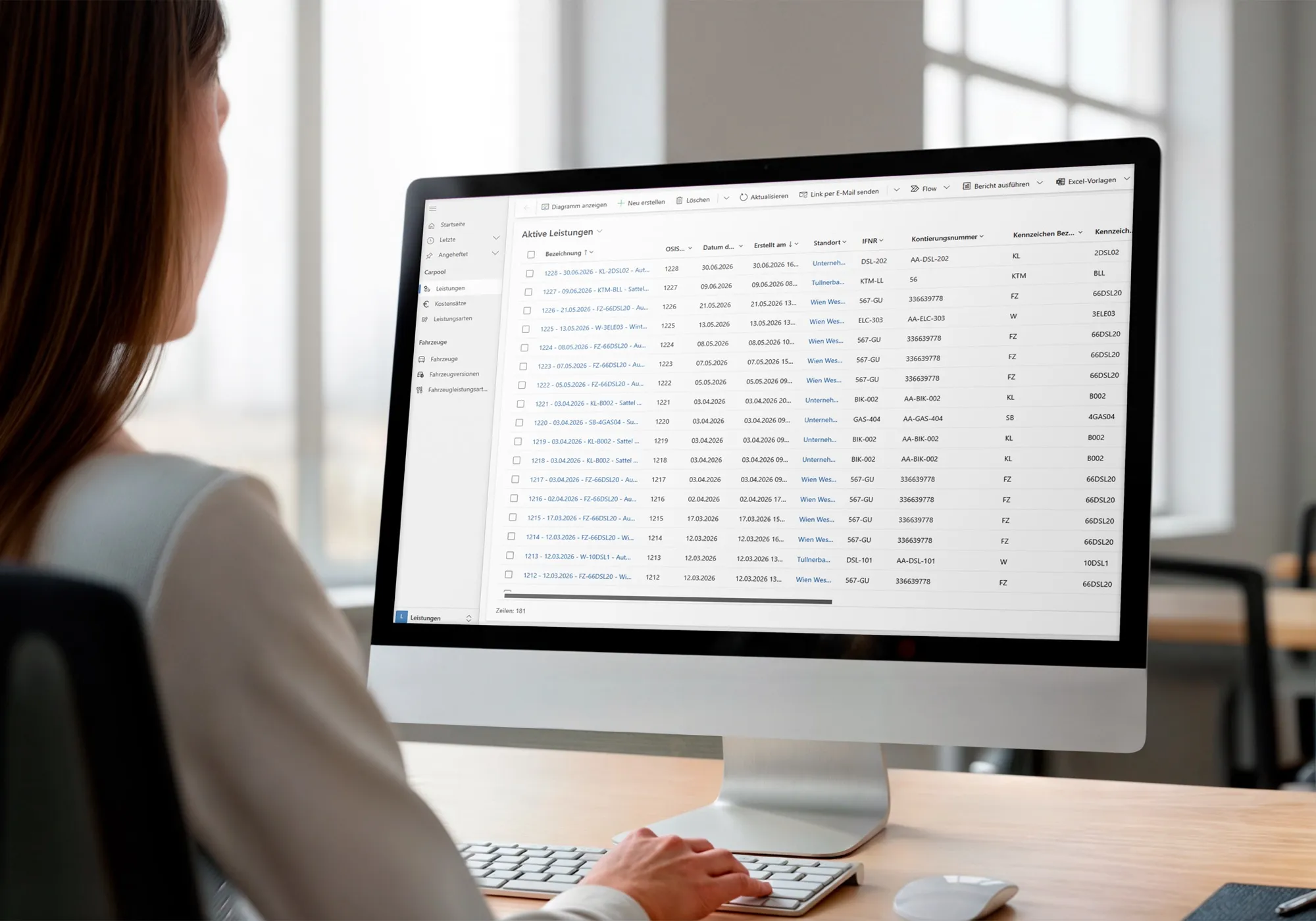
OSIS stands for Operative Services Information System – and that is exactly what it is about at its core: bringing together security-relevant information, operational workflows and central data around station operations in a traceable way. OSIS not only captures security-relevant incidents and operational disruptions, but also supports further operational processes – from master data and service tasks to cleaning, controlling and digital check-ins.
Off-the-shelf standard software could only have covered these requirements to a limited extent. Station operations processes are highly specific to ÖBB, interlock across several departments and depend on numerous internal systems. Evolit therefore implemented the solution individually on the Microsoft Power Platform – a technological foundation that supports flexible business processes, different interfaces for desktop, mobile and tablet, and integration into existing system landscapes.
Three things made the project particularly demanding:
- The variety. The platform bundles very different areas of responsibility – from documenting security-relevant incidents to station and building master data, cleaning, service, controlling and inventory management. It is used not just by one team, but across several ÖBB departments and other stakeholders.
- Handling sensitive data. Some of the processes involve particularly sensitive personal information. This data must be captured and processed in strict compliance with applicable data protection regulations – separated, protected and with clearly defined access rights. Data protection was not a side requirement here, but a central building block of the architecture from the very beginning.
- The integration. The platform does not stand alone; it is deeply embedded in ÖBB’s system landscape – via a range of interfaces, for example to reporting and information systems as well as to duty registration and the telephone system. Notifications run across multiple channels to ensure the right information reliably reaches the right people.
Analysis & Approach: Structure First, Then Deliver Step by Step
In a project of this scale, it is not enough to simply implement requirements technically. Business workflows first need to be understood and structured in a way that results in a platform that works in everyday operations. Evolit therefore started with several workshops, a high-level concept and an initial specification. This was followed by a detailed specification and, where needed, dedicated UX/UI design to define scope, priorities and implementation steps together with ÖBB.
Implementation was deliberately carried out in stages: from proof of concept to the first usable building blocks through to the MVP. The proof of concept was first tested in practice and later transferred into live operation. This created real value early on, while feedback from actual use flowed directly into further development.
Because requirements evolve in a project of this size, the modules were continuously evaluated in joint prioritisation workshops and priorities deliberately shifted. This kept the implementation manageable without losing sight of the overall goal: a platform that maps key station operations workflows digitally, traceably and extensibly.
“Evolit’s strength lay in truly understanding our business workflows and developing a solution from them, step by step, that works in everyday life for our colleagues at the station – not as a standard product, but tailored to our processes.”
Petra Lehrbaum
Head of QSU & Processes, ÖBB-Operative Services GmbH & Co KG
Implementation & Solution: One Platform for Station Operations Workflows
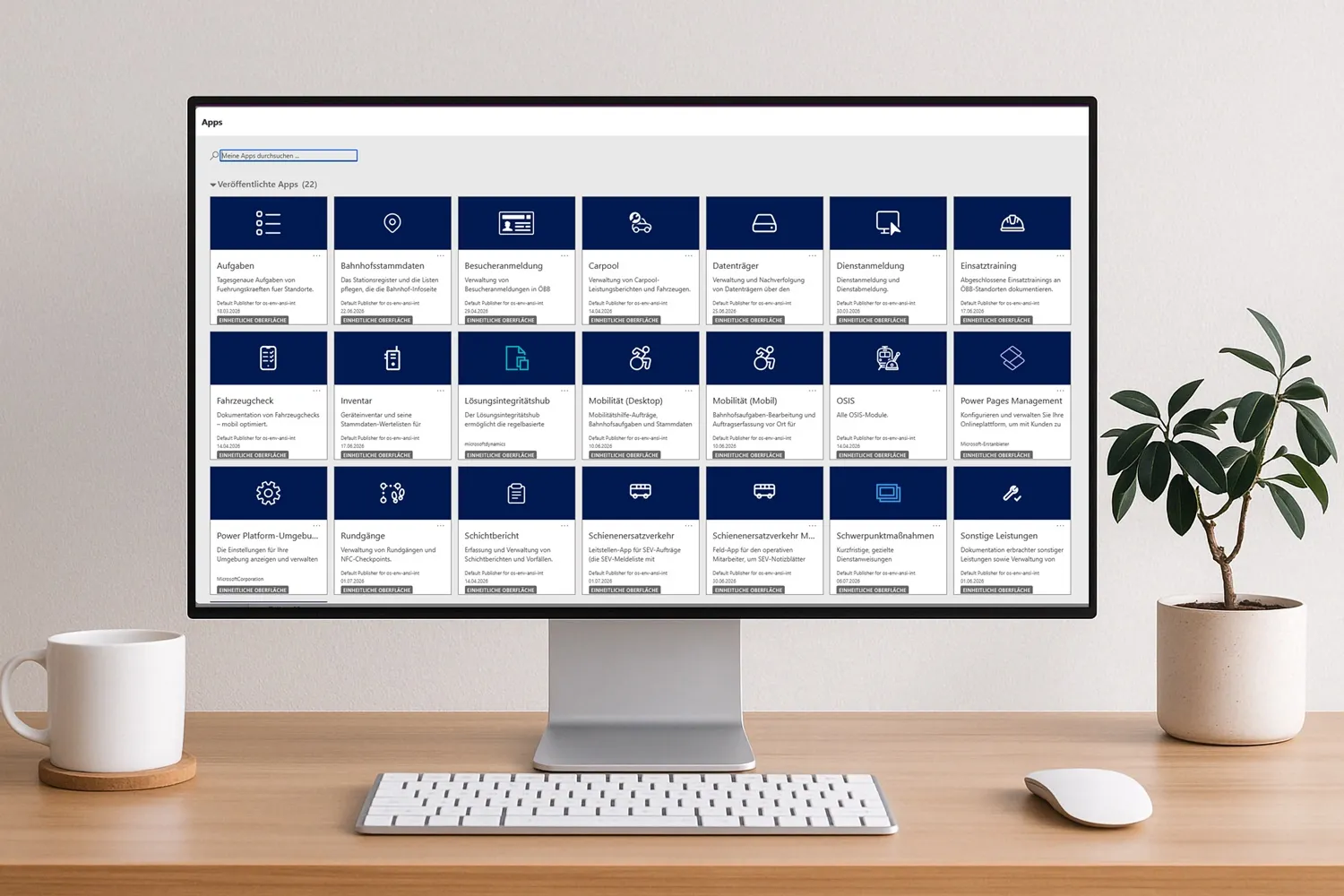
The result is a platform that reflects the full breadth of station operations – modular in design, so that individual building blocks can be used, extended and developed independently of one another.
At its core is incident and security management. Security-relevant incidents and operational disruptions are captured in a structured way, documented and consolidated into a central situation overview. Automatic notifications ensure that the responsible units are informed promptly and that relevant information reaches the people who need it.
Around this core, OSIS bundles further operational areas, including:
- station and building master data
- cleaning, service and controlling
- inventory and data media management
- mobility and carpool
- digital visitor registration at the corporate headquarters
- station information pages
- NFC-supported security patrols
- duty registration
Instead of many isolated point solutions, this creates a more consistent picture of operations on a technical foundation that can be maintained, extended and adapted to new requirements.
Results & Benefits: Traceable Processes and a Foundation for Further Expansion
With OSIS, ÖBB is not simply replacing an existing application. It is creating a foundation for mapping station operations processes – from security services to cleaning – in a more digital, structured and consistent way in the future.
With the first phase now accepted, the basis is in place to consolidate security and incident documentation, master data and further operational workflows on one shared platform. For ÖBB, this means:
Central data instead of scattered information
Station and building master data, incidents and operational information live on one shared platform instead of in scattered individual applications.
Structured documentation instead of inconsistent records
Security-relevant incidents and operational disruptions are captured following a shared schema and consolidated into a central, traceable situation overview.
A solution that can be extended step by step
The modular design allows individual building blocks to be developed independently and new use cases to be added without breaking the system.
OSIS will show its full value once the modules are in regular operation. Applications such as duty registration, security patrols, digital visitor registration and carpool will then enable a noticeable step towards digital, traceable and better integrated operational processes.
Just as important: the project is not an endpoint, but a foundation. A further requirements phase is already planned. It will incorporate the findings from the first phase’s tests and prepare the next stage of expansion. Additional use cases and modules are already known and partly analysed.
More on "Mobility"
Mobility
ETCS Key Management System for Trafikverket: Secure Key Management for Sweden's Railways
Evolit and Trafikverket are jointly developing an ETCS Key Management System with online key distribution for secure rail operations in Sweden.
Mobility
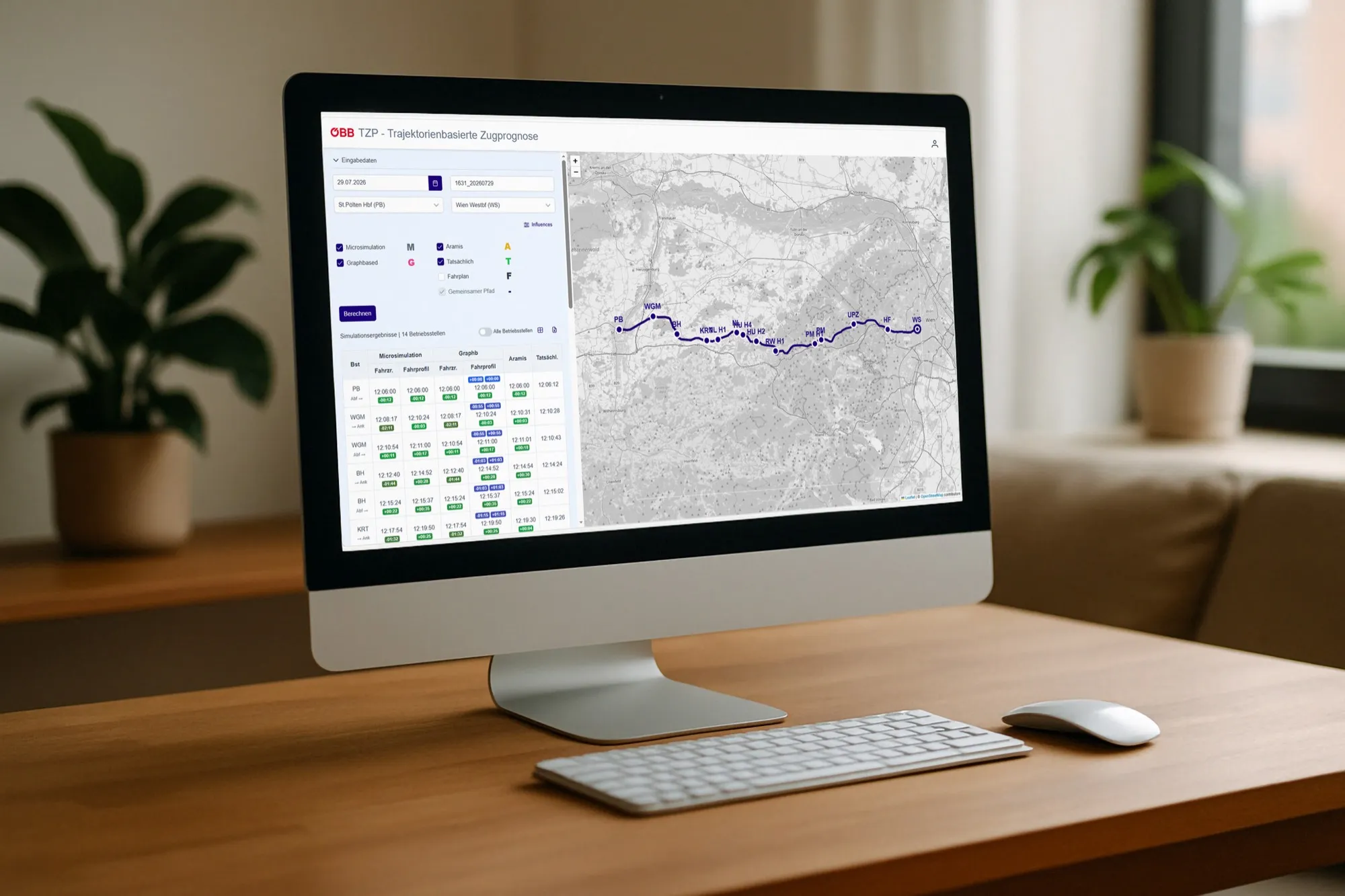
Train Prediction with Graph Theory: A Research Project Makes Train Runs Computable
Train prediction with graph theory: how ÖBB-Infrastruktur AG and Evolit model train runs and compare forecasting methods on a shared data basis.
Mobility
Digital Train Preparation in Rail Freight: PORTHOS at ÖBB
With PORTHOS, ÖBB-Infrastruktur is digitalising the planning, dispatching and execution of train preparation – from train path ordering to automated train data reporting.